Top 10 Soundproof Aluminum Window Manufacturers?
Choosing a soundproof window is not simply a matter of selecting the thickest glass. Frame design, sealing quality, acoustic testing, and installation accuracy all influence the final result. This guide introduces the Top 10 Soundproof Aluminum Window Manufacturers for buyers comparing performance, durability, and production capability.
The evaluation considers several practical details. These include laboratory sound ratings, aluminum alloy quality, glazing options, thermal performance, warranty terms, and customization support. We also examine whether manufacturers provide clear technical documents and realistic installation guidance. A well-designed window should reduce traffic noise, voices, and construction sounds without making the room feel dark or overly enclosed. Small details matter. Multi-point locks, continuous gaskets, and reinforced corners can affect long-term performance.
Our research approach combines manufacturer information, industry experience, product specifications, and user-focused comparisons. However, no shortlist is flawless. Published acoustic values may differ from results on an actual building site. Installation quality can weaken even an excellent product. Regional standards, wall construction, and local climate also deserve attention. For that reason, readers should request test reports, confirm glass configurations, and ask how performance was measured. The manufacturers discussed here may suit different projects, from urban apartments to hotels and office buildings. Some prioritize premium customization, while others focus on dependable volume production. Careful comparison remains essential. A quiet room begins with more than a product name.
What Defines a High-Quality Soundproof Aluminum Window Manufacturer?
A high-quality soundproof aluminum window manufacturer proves performance, rather than promising silence. The World Health Organization recommends keeping road traffic noise below 53 dB Lden and 45 dB Lnight. Therefore, manufacturers should explain how their products reduce real outdoor noise. Look for laboratory reports using ISO 10140-2, which measures airborne sound insulation under controlled conditions. Reliable reports should identify the complete window, glazing, frame, seals, and installation method.
Strong manufacturers publish tested acoustic ratings, such as Rw or STC, and explain their limitations. Laminated acoustic glass, multi-chamber aluminum frames, compression gaskets, and correctly fitted hardware all matter. A small installation gap can weaken an otherwise impressive specification. This detail is often overlooked. It should not be.
Tips: Ask for test reports from an accredited laboratory, not only marketing charts. Request results for the exact window size and glass combination. Check air leakage, water resistance, thermal performance, and warranty terms together. A window may reduce traffic noise effectively yet perform poorly against low-frequency machinery. Site measurements before ordering can prevent costly assumptions.
Experience also matters. Manufacturers should show installation guidance, corner details, drainage paths, and replacement-part support. The National Fenestration Rating Council notes that tested ratings depend on product configuration and testing conditions. That makes direct comparisons difficult. Honestly, no window can correct every weakness in a building envelope. Walls, vents, roof joints, and poor fitting may still transmit sound. Manufacturers who acknowledge these constraints appear more credible than those selling perfect silence.
Top 10 Soundproof Aluminum Window Manufacturers?
What Defines a High-Quality Soundproof Aluminum Window Manufacturer?
This indicative evaluation framework ranks the factors that most strongly define a high-quality soundproof aluminum window manufacturer. Acoustic testing, airtightness, glazing design, thermal performance, sealing systems, certified production, installation support, durability, customization, and after-sales service should be assessed together rather than by brand name alone.
The percentages represent suggested evaluation weights, not company rankings. Acoustic and airtightness performance should be verified through recognized laboratory testing and applicable standards such as ASTM E90, ASTM E283, EN 14351-1, or equivalent regional standards.
Key Product Features, Technologies, and Performance Standards
When comparing the top 10 soundproof aluminum window manufacturers, examine measured performance rather than advertising language. NFRC certification requires documented laboratory testing, while ASTM E90 and ISO 10140 measure airborne sound transmission through window assemblies. For traffic noise, OITC is usually more useful than STC because it includes lower frequencies. A strong specification often combines laminated acoustic glass, dissimilar glass thicknesses, and insulated air spaces. Multi-chamber aluminum frames also reduce vibration paths, especially when thermal breaks separate interior and exterior metal.
Numbers still need context. A window rated STC 40 may perform differently beside a poorly sealed frame. The installation matters greatly. Research from the U.S. Department of Energy indicates that windows can influence roughly 25% to 30% of residential heating and cooling energy use, making low U-factor glass valuable alongside acoustic control. WHO environmental noise guidance identifies road traffic as a significant health concern and recommends limiting long-term exposure levels. Ask for OITC, STC, U-factor, air-leakage, and water-penetration results from accredited laboratories. Not all reports are equally transparent. I would question any supplier offering one impressive decibel figure without test conditions, glass composition, or frame details. A quieter room is not guaranteed by thicker glass alone. Seals, sash alignment, wall construction, and field installation can defeat excellent laboratory performance.
Regional Strengths, Customization Options, and Industry Applications
Top 10 Soundproof Aluminum Window Manufacturers?
Regional strengths often shape a manufacturer’s performance. European producers usually emphasize thermal breaks, low-E glazing, and strict acoustic testing. North American specialists often focus on high STC ratings, storm resistance, and large commercial openings. Asian manufacturers may offer flexible fabrication, short lead times, and competitive project pricing. A credible top-ten list should compare verified test results, not marketing language.
The U.S. Department of Energy reports that windows can cause 25–30% of residential heating and cooling energy use.
Therefore, acoustic performance cannot ignore thermal design. Strong manufacturers combine insulated aluminum frames, laminated glass, compression seals, and warm-edge spacers. Buyers should request ISO 10140 laboratory results and field-installation guidance. One number is never enough.
Customization separates ordinary suppliers from experienced project partners. Airports may require laminated glazing and vibration control. Hotels often need quiet bedrooms, narrow sightlines, and concealed hardware. Hospitals benefit from smooth surfaces and reliable weather seals. Urban offices may prioritize daylight, solar control, and opening restrictors.
The World Health Organization’s Environmental Noise Guidelines identify road, rail, and aircraft noise as serious health concerns, making location-specific design essential.
Acoustic results can still weaken after poor installation.
That is the uncomfortable part. No ranking is flawless.
How to Choose the Right Soundproof Aluminum Window Manufacturer
Choosing among the top 10 soundproof aluminum window manufacturers requires more than comparing advertised decibel ratings. Ask for independent acoustic test reports, not polished brochure claims. The report should identify the complete window system, glass thickness, frame size, and testing conditions. Without these details, the number may mislead you.
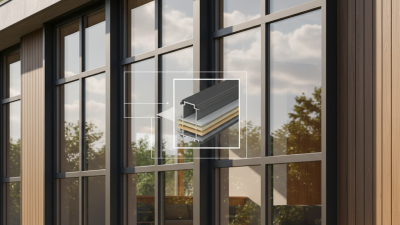
Start with the glass and sealing system. Laminated acoustic glass can reduce traffic noise, while multiple seals limit air gaps around the sash. A thermally broken aluminum frame may also improve comfort near busy roads. Ask whether the manufacturer controls extrusion, glazing, and final assembly. Better control usually means fewer fitting inconsistencies. Request factory samples and inspect corner joints, drainage paths, hardware movement, and gasket compression.
Installation deserves equal attention. Even a strong window performs poorly when the opening is uneven or the perimeter is badly sealed. Ask for installer training, site measurements, warranty terms, and documented projects with similar noise conditions. I once saw a high-rated window lose much of its benefit through a narrow, unsealed gap. That mistake was expensive. It also changed my view: manufacturer support after delivery matters as much as laboratory performance.
Compare lead times, replacement parts, maintenance guidance, and realistic acoustic expectations. A reliable manufacturer explains what the system cannot block, such as deep vibration or poorly sealed walls. Be cautious when sales staff avoid technical questions. Good evidence is usually specific, testable, and slightly less impressive than marketing language.