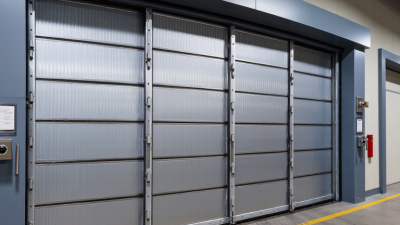
Choosing Blast Resistant Doors is not a matter of picking the thickest steel leaf or the highest rating on a product sheet. The right choice depends on the hazards identified for your facility, the building’s construction, and how people use each opening. A door beside a control room may need different performance from one serving a loading area. Details matter.
Start by defining the threat and the required level of protection with qualified security and structural professionals. Then check whether the test evidence covers the complete assembly: door leaf, frame, hinges, locks, anchors, and surrounding wall. A strong door installed in a weak frame can leave a serious gap in protection. That is not enough. Confirm that the documented test conditions match your project, rather than relying on a rating without context.
Daily operation deserves equal attention. Consider opening width, traffic, access control, emergency egress, maintenance, and exposure to weather or corrosive environments. A heavy door that staff struggle to close may create practical problems, even if its specifications look impressive. It is not always obvious. Ask suppliers for clear test reports, installation instructions, and maintenance requirements, and have the proposed assembly reviewed against your site conditions. This guide explains the questions to ask, the evidence to verify, and the trade-offs to weigh before making a purchase. Some details may still be uncertain until a site assessment is complete, so treat early estimates as a starting point—not a final design decision.

A blast-resistant door should be selected against a defined pressure-time load, not a single “blast rating.” Peak pressure, measured in psi, is the highest pressure the wave reaches. Impulse, measured in psi·ms, is the area beneath the pressure-time curve and captures how long the load acts.
Two events can have the same peak pressure but different impulses—and produce different demands on the door. Impulse matters too.
FEMA 426, Reference Manual to Mitigate Potential Terrorist Attacks Against Buildings, discusses blast effects in relation to pressure and exposure conditions. UFC 3-340-02, Structures to Resist the Effects of Accidental Explosions, provides pressure-impulse methods for structural design. Use these as technical references, not as a substitute for a site-specific threat assessment.
Define the credible event, standoff distance, wave direction, and whether the door sees reflected pressure. Then compare its peak-pressure and impulse demand with tested assembly performance. Check the frame, anchors, hinges, latch, and supporting wall together; a strong leaf cannot compensate for weak anchorage.
One detail is easy to miss: test conditions may not match the installed opening. I would record that uncertainty, then have a qualified blast engineer verify the design basis before specifying the door.

A blast-resistant door should be selected against a defined pressure-time load, not a generic “blast rating.” UFC 3-340-02 provides engineering methods for evaluating blast effects and structural response. Confirm the applicable edition and project criteria with a qualified structural engineer. Small errors matter.
Start with site-specific hazard data. Document credible event scenarios, potential source locations, standoff distances, and the door’s orientation. Nearby walls, openings, and terrain can change how pressure reaches an entrance. Use a pressure-time history, including peak reflected pressure and impulse, where the design basis requires it. The input data are rarely perfect, so record assumptions and uncertainty rather than hiding them.
The door leaf is only part of the load path. Check the frame, hinges or pivots, latching points, anchors, and supporting wall as one assembly. A strong leaf can still fail if its frame pulls away from weak masonry. Consider whether the opening must remain operable after the event, and whether debris or post-event pressure affects access. Have calculations, drawings, and test evidence reviewed against the project’s stated criteria. Then keep the selected load basis with the procurement documents, so substitutions do not quietly change the design.
Set design loads using UFC 3-340-02 and site-specific hazard data.
These bars show standard pressure-unit references converted to kilopascals—not blast design loads. Establish door design loads from a qualified, site-specific hazard assessment and apply the relevant UFC 3-340-02 criteria; verify the applicable edition and project requirements with the responsible engineer.
A blast-resistant door should be selected against a defined pressure-and-impulse requirement, not a product label. ASTM F2247 provides a test method for assessing metal doors under equivalent static pressure. Ask for the complete test report, including the tested frame, anchors, hardware, peak pressure, and measured deflection. A door leaf tested without its actual frame and anchorage may tell you little about the installed assembly.
Details matter.
FEMA 426, Reference Manual to Mitigate Potential Terrorist Attacks Against Buildings, notes that blast effects vary with pressure and distance; its damage guidance describes window glass breakage at pressures around 1 psi. That figure is not a door rating, but it shows why nearby glazing and wall construction belong in the same assessment. Compare the report’s test pressure with a project-specific engineering analysis, and check whether the latch stayed engaged and the frame remained attached. Ask what the test did not cover, too. A laboratory setup cannot reproduce every site condition, and I would not treat one successful test as a promise of identical field performance.
Start with the facility’s hazard assessment, not a door catalog. Confirm the required pressure, impulse, load direction, and performance criteria with a qualified blast engineer. Peak pressure alone is not enough. A short, sharp pressure pulse can affect an assembly differently from a longer load.
Treat the door, frame, anchors, and hardware as one tested system. A strong door leaf may still fail if its frame twists or its anchors pull from the wall. Check that test data matches the opening size, wall construction, and expected load direction. Look closely at hinge capacity, latch engagement, and strike alignment. Small details matter. A latch that misses by a few millimeters can compromise the whole assembly.
Ask how the frame transfers force into the surrounding structure. Concrete strength, edge distances, anchor spacing, and installation tolerances all matter. Specify compatible components and require clear installation details, not just product ratings. There is no tidy shortcut: site conditions can differ from drawings, and that difference deserves a second look. Have the proposed assembly reviewed by a qualified structural professional before installation. Keep inspection records, and verify that the finished door closes and latches consistently.
How to Choose Blast Resistant Doors for Your Facility?
Choosing a blast-resistant door starts with the hazard, not the catalog label. Ask for documented pressure and impulse ratings that match the facility’s defined load case. Pressure describes peak force; impulse reflects force over time. A door rated for one without the other may not represent your exposure. Review test or engineering records, including mounting details and whether the assembly was assessed as installed.
Tips: Compare the specified load with the door’s rating, and confirm the rating applies to the full assembly. Check frame anchorage, hinges, latches, and surrounding structure. Small gaps matter. Have a qualified structural or blast engineer review assumptions and site conditions.
Deflection matters because a door can remain attached yet bend enough to block nearby equipment or escape routes. Ask for maximum permitted deflection and how it was measured. Then verify post-blast functionality: Can the door still open, close, and latch, or is replacement expected? Those are different performance goals. A rating can look reassuring on paper, but installation quality and maintenance may be less tidy than the specification suggests. Include inspection access, clearance, and a realistic repair plan in your selection.