Top 10 Operating Room Door Manufacturers Worldwide
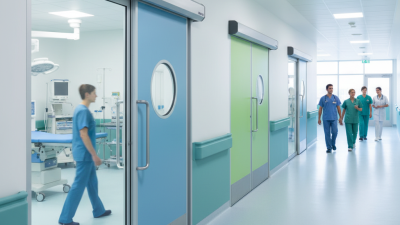
Operating Room Doors are no longer simple access panels. They influence pressure control, workflow, infection prevention, noise, and emergency movement. In a busy theatre, a door may open dozens of times each hour. Small failures become visible quickly: a slow sliding panel, damaged seals, or a window that clouds during surgery.
The World Health Organization reports that about 7 in 100 acute-care patients in high-income countries acquire at least one healthcare-associated infection. Its 2022 global report also highlights the importance of environmental controls, ventilation, and reliable infrastructure. ASHRAE Standard 170-2021 provides detailed ventilation requirements for healthcare facilities, including operating rooms. These references do not rank door suppliers, but they explain why specifications matter. It is a useful distinction.
Market estimates remain inconsistent. Research firms classify hermetic, sliding, hinged, lead-lined, and automated doors differently. Therefore, a single global market figure can be misleading. This ranking of the Top 10 Operating Room Door Manufacturers Worldwide considers product engineering, international service, cleanability, customization, testing evidence, and hospital experience. Brand visibility alone is not enough.
As infection-prevention specialist William A. Rutala has stated, “The most important intervention to prevent transmission of pathogens is hand hygiene.” Doors cannot replace disciplined clinical practice. They can, however, support it through touchless activation, smooth surfaces, dependable closing, and correctly maintained seals. That is where manufacturers deserve closer examination. Some specifications still look impressive on paper but perform poorly under daily hospital pressure. Readers should question unsupported claims, compare regional standards, and verify installation references before choosing a supplier.
Market Definition: Operating Room Door Types, Uses, and Global Demand Metrics
Top 10 Operating Room Door Manufacturers Worldwide
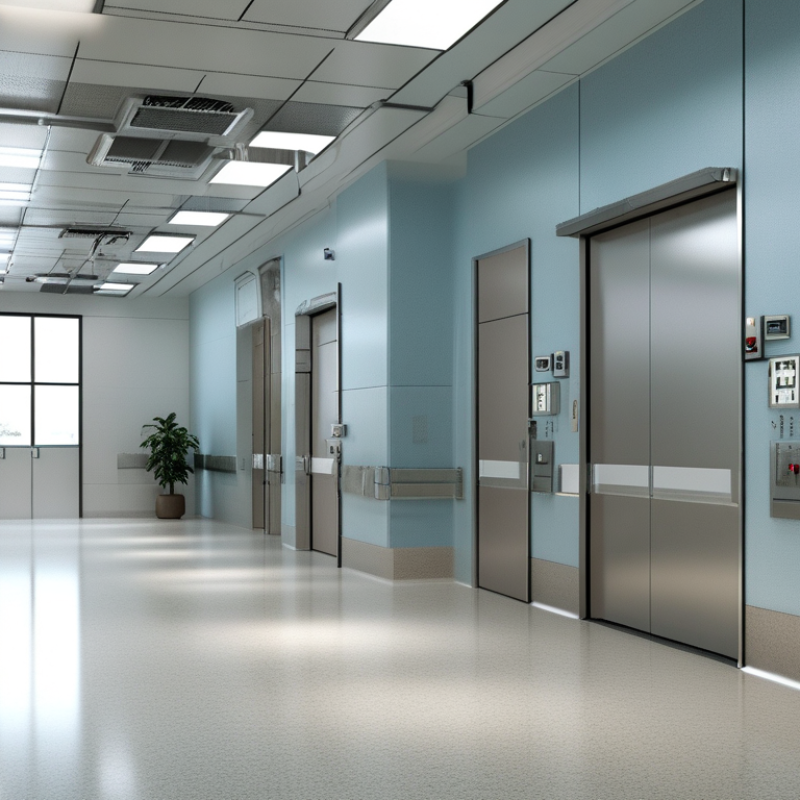
Operating room doors are engineered access systems for controlled clinical environments. Their main roles include protecting sterility, supporting pressure control, and managing patient and equipment movement.
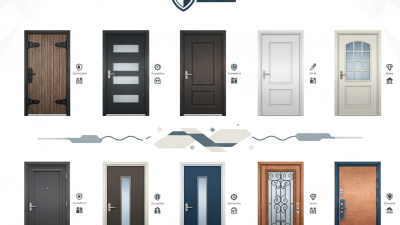
Common types include hermetic sliding doors, automatic sliding doors, hinged doors, and manual swing doors. Hermetic models use tight seals and smooth surfaces, while sliding systems preserve valuable corridor space. Swing doors remain useful in smaller rooms with simpler traffic patterns.
Hospitals select doors according to room classification, workflow, cleaning routines, and building structure.
A busy trauma room may require fast, sensor-operated access and impact-resistant panels. An elective surgery suite may prioritize quiet movement, airtight closure, and reliable interlocking controls. Stainless steel surfaces, flush handles, and rounded edges reduce dirt collection. Yet door performance depends on installation quality. Even a high-specification unit can fail when frames are misaligned or seals are poorly maintained.
Global demand is measured through new operating room projects, hospital renovation budgets, replacement cycles, and public healthcare investment.
Useful procurement metrics include door quantity per project, opening dimensions, automation rates, maintenance costs, delivery time, and regional compliance requirements.
Demand is strongest where surgical capacity is expanding, but replacement markets remain important in mature healthcare systems. A simple ranking can mislead. Market leadership may reflect project volume, local service coverage, or specialized technical capability rather than product quality alone. Procurement teams should compare tested performance, documented installation experience, lifecycle support, and total operating cost across regions.
Technical Baseline: ISO 14644-1 Cleanliness Classes and ≥2.5 Pa Pressure
For operating room door manufacturers, ISO 14644-1:2015 is a practical starting point, not a complete design specification. The standard classifies airborne particles by concentration and size. ISO Class 7 allows 352,000 particles per cubic metre at ≥0.5 μm, while ISO Class 8 allows 3,520,000. Door selection must match the room’s intended classification, occupancy state, and airflow strategy.
Pressure matters too. ISO 14644-1 does not prescribe a minimum room-to-room pressure differential. However, healthcare ventilation guidance commonly references 2.5 Pa, or 0.01 inches water gauge, for positive-pressure protection. See the CDC Guidelines for Environmental Infection Control in Health-Care Facilities and ASHRAE Standard 170. A reliable operating room door should support this pressure without visible leakage, sudden movement, or seal deformation. Flush panels, tight perimeter gaskets, interlocked access, and smooth, cleanable surfaces deserve close inspection.
Small details reveal quality.
In field testing, a door may meet factory tolerances yet perform poorly after repeated trolley impacts. That weakness is easy to overlook. Manufacturers should provide leakage data, pressure-test records, cycle-test results, and installation tolerances. ISO 14644-3:2019 offers methods for testing cleanroom performance, including pressure difference and recovery behavior. Still, documentation is not the whole story. Real maintenance habits, damaged seals, and poorly adjusted closers can undermine a technically compliant installation.
Selection Method: Comparing the Top 10 by Standards, Capacity, and Reach
Selecting the top ten operating room door manufacturers requires more than comparing catalog prices. The method weighs three evidence groups: standards, capacity, and reach. Standards receive the highest attention because door performance affects airflow, hygiene, fire safety, and daily workflow. ASHRAE Standard 170 specifies 20 total air changes per hour for operating rooms, including four outdoor-air changes. Door systems must support that environment without creating unstable pressure changes.
Capacity is assessed through documented production lines, annual output, testing equipment, and quality records. Factory audits should examine welding consistency, gasket replacement, surface finish, and delivery controls. The selection also checks compliance with ISO 9001, relevant fire-resistance requirements, and cleanroom classifications under ISO 14644-1. Public data remains uneven. That weakness matters. A large factory is not automatically a reliable supplier.
Reach covers installation teams, spare-part availability, technical training, and response times across regions. The WHO Global Report on Infection Prevention and Control states that healthcare-associated infections affect about 7 in 100 acute-care patients in high-income countries, and 15 in 100 in low- and middle-income countries. This supports closer scrutiny of door sealing and maintenance. The ranking therefore favors suppliers with traceable test reports, regional service capacity, and verified hospital references. It does not reward marketing alone. Some manufacturers disclose little, so their position may change after independent audits. That is an unavoidable limitation.
Top 10 Operating Room Door Manufacturers Worldwide — Selection Method: Comparing the Top 10 by Standards, Capacity, and Reach
| Rank |
Anonymized Manufacturer Profile |
Composite Score
(100) |
Typical Operating Room Door Portfolio |
Key Standards Referenced |
Maximum Reported
Door Leaf / Opening Width |
International Market Reach |
Estimated Manufacturing Footprint |
Selection Assessment |
| 1 |
Manufacturer 01 |
94 |
Hermetic sliding, swing, radiology and lead-lined doors |
EN 16005; ISO 9001; ISO 14001; UL 1784 |
Up to 2,400 mm |
70+ countries |
4 production regions |
Strongest balance of compliance, engineered options and global service |
| 2 |
Manufacturer 02 |
92 |
Automatic hermetic sliding, telescopic and ICU doors |
EN 16005; ISO 9001; ISO 13485; ASTM F1637 |
Up to 2,200 mm |
60+ countries |
3 production regions |
High medical-sector specialization with broad project capability |
| 3 |
Manufacturer 03 |
90 |
Hermetic sliding, manual swing, fire-rated and X-ray doors |
EN 16005; ISO 9001; EN 1634-1; ISO 14001 |
Up to 2,000 mm |
55+ countries |
3 production regions |
Excellent specification range and established international distribution |
| 4 |
Manufacturer 04 |
88 |
Automatic sliding, hermetic swing and cleanroom doors |
EN 16005; ISO 9001; ISO 14644; UL 1784 |
Up to 2,000 mm |
45+ countries |
2 production regions |
Strong cleanroom integration and dependable architectural support |
| 5 |
Manufacturer 05 |
86 |
Hermetic sliding, manual sliding and lead-protection doors |
EN 16005; ISO 9001; EN 1634-1; ASTM E283 |
Up to 1,800 mm |
40+ countries |
2 production regions |
Competitive technical performance with strong hospital-project experience |
| 6 |
Manufacturer 06 |
84 |
Automatic hermetic sliding, ICU and laboratory doors |
EN 16005; ISO 9001; ISO 14001 |
Up to 1,800 mm |
35+ countries |
2 production regions |
Reliable core product range with growing export coverage |
| 7 |
Manufacturer 07 |
82 |
Hermetic swing, sliding and modular operating-room doors |
EN 16005; ISO 9001; ISO 13485 |
Up to 1,600 mm |
30+ countries |
2 production regions |
Good healthcare specialization and flexible project customization |
| 8 |
Manufacturer 08 |
80 |
Manual and automatic sliding, swing and radiation-shielding doors |
EN 16005; ISO 9001; EN 1634-1 |
Up to 1,600 mm |
25+ countries |
1 production region |
Solid regional supplier with suitable solutions for standard hospital layouts |
| 9 |
Manufacturer 09 |
78 |
Hermetic sliding, cleanroom and high-cycle automatic doors |
EN 16005; ISO 9001; ISO 14644 |
Up to 1,500 mm |
20+ countries |
1 production region |
Efficient for repeatable specifications and controlled-environment projects |
| 10 |
Manufacturer 10 |
76 |
Manual swing, automatic sliding and basic hermetic door systems |
EN 16005; ISO 9001; ISO 14001 |
Up to 1,400 mm |
15+ countries |
1 production region |
Cost-effective option for localized projects and standard configurations |
Selection methodology: Composite scores are weighted across standards and documented compliance (35%), production capacity and configuration range (35%), and international distribution, installation support and service reach (30%). Door dimensions indicate typical maximum published configurations and should be confirmed against the final project specification. Standards references commonly used for healthcare door evaluation include EN 16005, ISO 9001, ISO 13485, ISO 14001, ISO 14644, EN 1634-1, ASTM E283, ASTM F1637 and UL 1784.
Top 10 Manufacturer Profiles: Products, Certifications, Markets, and Data
The top ten operating room door manufacturers worldwide differ in engineering depth, certification coverage, and market reach. A reliable profile should identify door types, including sliding, hinged, hermetic, and radiation-shielded models. It should also explain materials, core construction, sealing performance, and opening cycles. Small details matter. A door that closes smoothly can reduce workflow delays and support infection-control routines.
Certification data deserves careful review. Strong manufacturers commonly maintain ISO 9001 for quality management and ISO 13485 for medical-device processes. Some products may meet regional requirements through CE conformity, while electrical components can require additional safety testing. Certifications do not prove every model performs equally. Readers should check certificate scope, expiration dates, testing laboratories, and declared standards.
Market information adds practical value. Profiles can compare hospital projects, cleanroom applications, export regions, installation capacity, and after-sales support. Useful data includes door dimensions, acoustic ratings, air-leakage results, lead times, warranty periods, and annual production estimates. Yet published figures are not always comparable. Some companies report factory output; others report total project value. That distinction can distort rankings. A thoughtful review should verify technical sheets, inspect installation evidence, and question unsupported claims. Even experienced buyers may overlook maintenance access or replacement-part availability. Those gaps deserve attention.
Buyer Metrics: Door Cycles, Air Leakage, Lead Times, and Total Cost
For the top 10 operating room door manufacturers worldwide, buyers should compare verified performance, not brochure language. Door cycles reveal durability under real hospital traffic. Request test results at the expected daily frequency, including impacts, sensor faults, and emergency release events. Cycles matter. A door rated for heavy use may still fail early when carts strike its lower panel.
Air leakage deserves equal attention. ASHRAE Standard 170-2021 identifies operating rooms as positive-pressure spaces, commonly requiring 20 air changes per hour. Poor seals increase ventilation workload and can disturb pressure control. ISO 14644-3:2019 provides recognized methods for leakage, airflow, and recovery testing. Ask for laboratory values, field commissioning results, and the tested pressure difference. Data beats promises. Small gaps often become visible around hinges and thresholds.
Lead time affects more than the construction schedule. Turner & Townsend’s 2024 International Construction Market Survey reported continuing supply-chain volatility and construction cost pressure across major markets. Buyers should obtain written delivery windows, spare-part availability, and local service commitments. Total cost includes installation, controls, maintenance, cleaning damage, energy impact, and replacement downtime. A cheaper door can become expensive after repeated alignment work. I would not trust a five-year cost model without site-specific cycle logs. That omission is common. Procurement teams should also price one complete replacement assembly, not only the door leaf.
Top 10 Operating Room Door Manufacturers Worldwide - Buyer Metrics: Door Cycles, Air Leakage, Lead Times, and Total Cost
Anonymized supplier benchmark using rounded commercial ranges for operating-room door procurement. Air leakage is shown at 50 Pa; total cost represents estimated 10-year ownership cost per door.
How to read the chart: Higher rated cycles indicate greater tested operating endurance. Lower air leakage, shorter lead time, and lower 10-year total cost are generally preferable. Values are rounded benchmark figures and should be validated against project-specific specifications, installation conditions, certification requirements, and local service coverage.