Leave Your Message

China Best Rolling Steel Fire Door Manufacturer

China Best Rolling Steel Fire Door Manufacturer

Choosing a Rolling Steel Fire Door is not simply a purchasing decision. It is a decision about time, containment, and human safety. In a busy warehouse, flames can meet stored cartons within minutes. A properly specified door can help limit fire spread and protect escape routes. However, the door alone cannot solve every fire risk.

Arthur E. Cote, a respected fire protection engineer and former NFPA executive, stated, “Fire protection is a system, not a single product.” That principle remains highly relevant. Door design, fire rating, wall construction, installation quality, inspection, and maintenance must work together. A strong manufacturer should explain these connections clearly. It should also provide reliable testing records, traceable materials, and practical technical support.

Look closely at the details. Galvanized or stainless steel surfaces may suit different environments. Guide rails should remain aligned. Bottom seals must close against uneven floors. The curtain should move smoothly, without harsh vibration or delayed release. Automatic closing systems require regular inspection. Small defects can become serious weaknesses.

Our experience with industrial projects shows that specifications often look perfect on paper. Real buildings are less predictable. Openings vary. Dust accumulates. Operators make mistakes. This is where honest engineering matters. A dependable China Rolling Steel Fire Door manufacturer should discuss limitations, not promise impossible protection. Product selection should follow project conditions, applicable standards, and qualified professional review. No fire door is perfect. Yet careful design, disciplined installation, and continued maintenance can make its protection meaningful when seconds matter.
China Best Rolling Steel Fire Door Manufacturer

Types and Construction of Rolling Steel Fire Doors

China Best Rolling Steel Fire Door Manufacturer

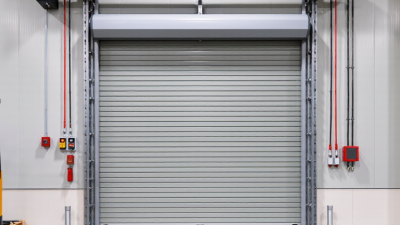
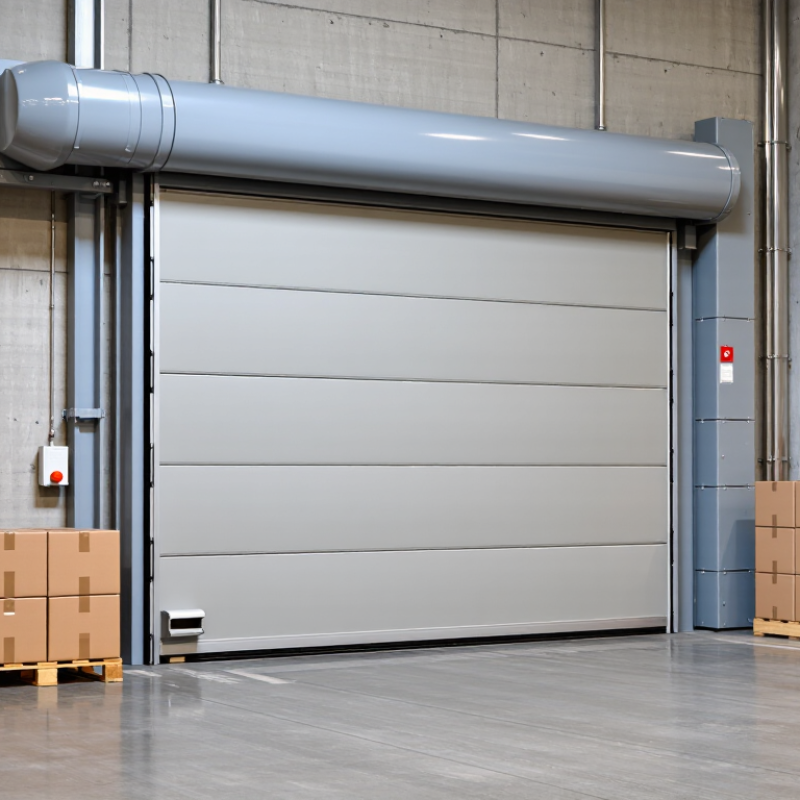
Rolling steel fire doors combine a flexible curtain with a protected opening system. Common types include service doors, insulated fire doors, smoke-control shutters, and counter fire doors. Service doors suit warehouses and loading areas. Insulated models reduce heat transfer across corridors and compartment walls. Smoke-control designs use tighter guides and tested seals. Counter doors fit compact openings above counters or hatches.

Construction begins with interlocking galvanized steel slats, a bottom bar, side guides, a barrel, and a protective hood. The curtain travels vertically and closes through gravity or a controlled release device. Fusible links may activate at a defined temperature, while electronic systems can connect to fire alarms. However, activation hardware must match the tested assembly. A strong curtain alone is not enough.

NFPA reported about 1.5 million fires and 4,000 civilian fire deaths in the United States during 2023, in its Fire Loss in the United States report. That risk explains why opening protection needs documented testing. NFPA 80 addresses installation and maintenance practices. UL 10B and UL 10C evaluate fire-resistance performance, while UL 1784 measures smoke leakage. EN 1634-1 provides another widely used fire-door test route.

Field experience shows that alignment often decides performance. Dust inside the guides can slow closure. A damaged bottom bar can leave a visible gap. Small gap. Designers should verify wall construction, clearances, rating duration, and inspection access before ordering. Some projects still specify a rating without checking the complete wall-and-door assembly. That deserves reconsideration.
Fire Resistance Ratings and Performance Standards

China Best Rolling Steel Fire Door Manufacturer

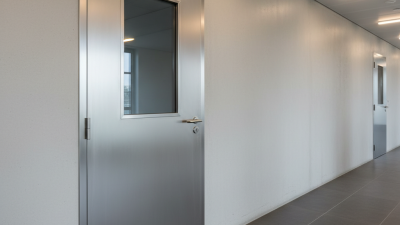
Fire resistance ratings describe tested performance, not a permanent guarantee. A rolling steel fire door may carry a 3-hour, 1½-hour, 1-hour, or ¾-hour rating. The correct rating depends on the wall assembly and opening location. Testing under UL 10B or UL 10C evaluates fire exposure, flame passage, and door operation. NFPA 80 also requires approved installation, clearances, inspections, and maintenance.

European projects commonly reference EN 1634-1. Its classifications separate integrity, insulation, and radiation performance. An “E” rating limits flames and hot gases. An “EI” rating also restricts heat transfer. This distinction matters near storage rooms, corridors, and protected escape routes. A strong curtain, guides, bottom bar, and automatic closing system must work together. Small gaps can become serious weaknesses.

The risk is measurable. NFPA’s Fire Loss in the United States During 2022 reported about 1.5 million fires and 18.1 billion dollars in property damage. A fire door cannot prevent every loss. It can slow fire spread when specified and maintained correctly. Site experience shows a common problem: doors are tested carefully, then neglected after installation. Dust, impact damage, and blocked closing paths can reduce real performance. Ratings deserve verification, not blind trust. Industry reports help, but field inspection still reveals the uncomfortable details.

Manufacturing Process of China’s Rolling Steel Fire Doors

China Best Rolling Steel Fire Door Manufacturer

Manufacturing Process of China’s Rolling Steel Fire Doors

Reliable rolling steel fire doors begin with controlled material selection. Manufacturers inspect each steel coil for thickness, flatness, and surface defects. The coil is then uncoiled, cut, and shaped through precision roll forming. This creates consistent curtain profiles with accurate edges. Small errors matter. A slight curve can affect closing performance.

Workers assemble the curtain with end locks, guide rails, a bottom bar, and a tested operating system. Welding points receive visual and dimensional checks. Surfaces are cleaned before galvanizing or powder coating, depending on the required environment. The finished door is assembled and adjusted by experienced technicians. They check curtain balance, descent speed, emergency release, and repeated opening cycles. Fire-resistance testing should follow the project’s applicable standards and use traceable records. In practice, documentation is sometimes treated as paperwork, but it can reveal process weaknesses.

Tips: Confirm steel thickness, test reports, installation conditions, and maintenance access before ordering. Keep guides aligned and inspect moving parts regularly. Dust is easy to ignore. It is not harmless. A clean guide channel supports smoother operation and may reduce premature wear. Manufacturers should also review failed tests honestly, because improving one detail often protects the entire production process.

China Best Rolling Steel Fire Door Manufacturer - Manufacturing Process of China’s Rolling Steel Fire Doors

Manufacturing Dimension Typical Data or Specification Manufacturing Process or Quality-Control Focus
Door Construction Interlocking rolling curtain made from formed steel slats, supported by guide channels, a barrel assembly, brackets, and a bottom bar. The curtain, guides, barrel, and closing mechanism are manufactured as a coordinated tested assembly because fire performance depends on the complete door system.
Curtain Slat Material Cold-rolled or galvanized steel sheet is commonly used; stainless steel may be selected for corrosive or hygiene-sensitive environments. Incoming material is checked for grade, thickness, surface condition, flatness, and traceability before roll forming.
Steel Thickness Approximately 0.8–1.5 mm for many rolling fire-door curtain applications; the final value depends on design load, opening size, and test construction. Thickness is verified with calibrated gauges at multiple points to control strength, weight, and dimensional consistency.
Slat Profile Formation Roll-forming lines shape flat steel strip into interlocking profiles with controlled curvature and edge geometry. Roll stations are adjusted to limit twisting, dents, edge cracking, and dimensional variation along the full strip length.
Fire-Resistant Core or Insulation Depending on the design, the curtain may use insulated steel slats, mineral-based insulating materials, or a tested non-insulated fire curtain construction. Insulation type, density, placement, and fastening method must match the tested construction and cannot be changed without reassessment.
Cutting and Length Control Formed slats and steel components are cut to drawings based on the required clear opening width, height, and side-room dimensions. Cut length, squareness, burr condition, and component identification are inspected before assembly.
Guide Rails Steel guide channels commonly include side clearances, retainer features, and fastening provisions for wall or structural support. Guide alignment and internal clearance are checked to ensure smooth curtain travel and reliable fire closure.
Barrel and Shaft Assembly The barrel carries the rolled curtain and is supported by brackets, bearings, or end plates selected for the curtain weight and opening size. Rotation, shaft straightness, bearing fit, bracket location, and curtain winding direction are verified during assembly.
Bottom Bar A reinforced steel bottom bar provides lower-edge rigidity and helps maintain contact with the sill or floor during closing. The bottom bar is checked for straightness, end-cap fit, sealing compatibility, and unobstructed movement within the guides.
Welding and Mechanical Joining Resistance welding, arc welding, bolting, riveting, or other approved joining methods may be used according to the component design. Weld appearance, penetration where applicable, fastener tightness, distortion, and sharp edges are inspected before surface finishing.
Surface Preparation Typical preparation includes degreasing, cleaning, abrasive treatment or chemical pretreatment, followed by drying. Cleanliness and surface energy are controlled to improve coating adhesion and reduce premature corrosion.
Protective Coating Common options include powder coating, liquid paint systems, or galvanized protection, depending on the environment and specification. Coating thickness, color consistency, curing condition, adhesion, and visible defects are checked. Coating selection must be compatible with the fire-tested design.
Operating Mechanism Manual chain operation, tubular or side-mounted motor operation, and controlled fire-release systems are common configurations. The mechanism is tested for opening, closing, stopping, limit positioning, overload protection, and safe release behavior.
Automatic Fire Closure A fire-door system may incorporate a fusible link, smoke or heat detection interface, alarm signal, or fail-safe release arrangement. Closure must be controlled so the curtain reaches the closed position without creating an unsafe impact hazard, subject to the tested system design.
Smoke and Edge Sealing Optional smoke seals, guide seals, header treatments, and sill interfaces may be used where required by the door specification. Seal continuity, compression, temperature suitability, and installation position are checked against the approved design.
Dimensional Inspection Key measurements include curtain width and height, guide spacing, barrel position, headroom, side room, and mounting-hole locations. Inspection is completed using approved drawings and calibrated measuring equipment before final packaging.
Operational Testing The completed door is cycled through opening and closing operations, with checks for noise, binding, uneven winding, travel, and control response. Any abnormal resistance, curtain misalignment, electrical fault, or incomplete closure is corrected before release.
Fire-Resistance Verification Fire ratings are established through testing and classification under the applicable national, regional, or project-required standard. A fire rating must not be inferred from steel thickness alone; the tested curtain, guides, hardware, installation method, and supporting construction are all relevant.
Corrosion Protection Check Protection level is selected according to indoor, semi-exposed, humid, coastal, industrial, or chemically aggressive conditions. Visual coating inspection and, where specified, dry-film thickness or adhesion testing are performed before dispatch.
Packaging and Shipment Curtains, guides, brackets, controls, fasteners, and installation documents are protected against impact, moisture, and deformation during transport. Components are labeled against the approved bill of materials, while exposed finished surfaces are separated with suitable protective materials.
Technical Note: The values shown are typical industry ranges and manufacturing practices for rolling steel fire doors. Final dimensions, materials, operating systems, and fire classifications must be confirmed through the approved design, applicable regulations, and the relevant tested door assembly.

Quality Control, Testing, and Safety Certification

China Best Rolling Steel Fire Door Manufacturer

Quality control begins before a rolling steel fire door reaches the test furnace. Steel thickness, curtain alignment, guides, brackets, and bottom bars require documented checks. During production, inspectors should record coil batches, welding points, spring settings, and closing speed. A small gap at the guide rail can weaken smoke control. It is easy to miss.

The National Fire Protection Association reported 1.5 million fires in the United States during 2022. Its report also recorded 3,790 civilian fire deaths and approximately 18.1 billion dollars in property damage. These figures show why fire-door claims need evidence, not attractive specifications. A responsible manufacturer uses fire-resistance testing under recognized methods, such as UL 10B, UL 10C, or EN 1634-1, according to the target market. Accredited laboratories should verify exposure time, temperature, closing behavior, and structural performance.

Certification is only one part of safety. Installation, wall construction, clearances, and routine inspection affect real performance. NFPA 80 guidance requires continued maintenance and inspection for many fire-door assemblies. Factory acceptance checks should include repeated drop tests, manual release tests, and obstruction detection. We also need to acknowledge a weakness: laboratory conditions cannot reproduce every warehouse, factory, or loading dock. Better records, clearer installation instructions, and field feedback help close that gap.

How to Select the Best Rolling Steel Fire Door Manufacturer

China Best Rolling Steel Fire Door Manufacturer

How to Select the Best Rolling Steel Fire Door Manufacturer

Selecting a rolling steel fire door manufacturer in China requires more than comparing prices. Examine factory experience, production equipment, and completed projects. Ask how long the manufacturer has produced fire-rated doors. Request test reports from recognized laboratories and verify their validity. The documents should match the exact door model, materials, and fire-resistance rating.

Study the door construction closely. Check steel thickness, curtain design, guides, bottom bar, motor, and emergency release system. A reliable manufacturer should explain how each component performs during heat exposure. Request drawings, installation instructions, maintenance schedules, and inspection records. Clear technical documents often reveal more than polished sales language. Site photographs can help, but they are not enough.

Communication is equally important. The supplier should confirm opening sizes, wall conditions, control requirements, and local building codes. Ask for sample production or a factory inspection when the project is critical. Delivery promises should include testing, packaging, spare parts, and technical support. A low quotation may hide thin steel or weak after-sales service. I have seen buyers focus too heavily on the initial price. That approach can create expensive delays later. No manufacturer is flawless, so discuss possible production errors openly. A dependable partner accepts questions, records changes, and provides measurable quality checks before shipment.

China Best Rolling Steel Fire Door Manufacturer: How to Select the Best Supplier

Fire-resistance ratings are commonly expressed in minutes, such as 60, 90, 120, and 180 minutes. When selecting a rolling steel fire door manufacturer, verify that the proposed door has been tested and certified for the required rating under the applicable standard, such as UL 10B, UL 10C, or EN 1634-1. The rating shown is a test classification and is not a product claim for any specific manufacturer.