2026 Best Moisture Resistant Doors Top Picks for Your Home?
When choosing doors for your home, moisture resistance becomes a crucial factor. In regions with high humidity or temperature fluctuations, moisture resistant doors can prevent significant damage. Industry reports indicate that improper moisture management can lead to mold growth and structural issues. According to John Walker, an expert in building materials, “Investing in moisture resistant doors is essential for long-term sustainability and home integrity.”
Moisture resistant doors are designed to withstand damp conditions better than standard doors. These doors typically utilize materials such as fiberglass or treated wood. Research shows that homes with effective moisture management strategies can reduce repair costs by up to 30%. It's important to consider both aesthetics and functionality when selecting these products.
Yet, not all moisture resistant doors perform equally. It’s advisable to consult certified professionals and review product specifications carefully. The market offers a variety of options, each with its pros and cons. Asking the right questions is essential to ensure you find the best fit for your home needs.

Understanding Moisture Resistant Doors: Importance and Benefits
Moisture-resistant doors are essential for homes in humid climates. They protect against mold, mildew, and wood rot. A report by the National Association of Home Builders states that moisture damage accounts for approximately 30% of all repair costs in homes. Therefore, choosing the right door can significantly impact your home’s longevity and maintenance costs.
When considering moisture-resistant options, look for materials such as fiberglass or steel. These materials tend to withstand humidity better than traditional wood. It's important to ensure proper sealing around doors to enhance their effectiveness. Remember, installing a quality door is only part of the solution; ongoing maintenance is key. Regularly check for signs of wear or damage.
**Tips:** Invest in doors with a weather seal. This small feature can prevent significant damage over time. Consider using a dehumidifier in humid areas. It helps maintain a stable environment for your doors and walls. Lastly, think about your local climate. Sometimes, even the best doors can underperform if not matched to environmental needs.
2026 Best Moisture Resistant Doors Top Picks for Your Home
| Door Type |
Material |
Moisture Resistance Level |
Energy Efficiency Rating |
Price Range ($) |
| Fiberglass Door |
Fiberglass |
High |
A |
800 - 1,200 |
| PVC Door |
PVC |
Medium |
B |
400 - 800 |
| Steel Door |
Steel |
High |
A+ |
600 - 1,000 |
| Wood Composite Door |
Wood Composite |
Medium |
B+ |
500 - 900 |
| Aluminum Door |
Aluminum |
Very High |
A++ |
1,000 - 1,500 |
Key Features to Consider When Choosing Moisture Resistant Doors
When selecting moisture resistant doors, consider materials that withstand humidity and temperature fluctuations. Fiberglass and composite materials often outperform traditional wood. They resist warping, rotting, and swelling. This makes them ideal for areas prone to moisture, such as bathrooms or basements.
Another crucial feature is the door's finish. A strong, waterproof finish enhances durability. Look for finishes designed for high humidity environments. Additionally, pay attention to weather stripping. Proper sealing prevents moisture penetration. It is essential for maintaining the door's integrity over time.
Installation methods also affect performance. Ensure doors are properly installed to prevent gaps. Improper installation can lead to moisture issues. Evaluate your home’s specific environment. Remember, even the best products require maintenance. Regular inspections can help catch wear before it becomes a serious problem.
2026 Best Moisture Resistant Doors - Key Features Comparison
Top Picks for 2026: Best Brands and Models for Your Home
When choosing moisture-resistant doors for your home in 2026, several top brands stand out. These doors offer durability and protection against moisture damage. Look for models that feature advanced materials engineered to withstand high humidity. Seamless designs are often more effective in preventing water leaks.
Tips for selecting the right door include measuring your space accurately. Consider both width and height to ensure a perfect fit. Pay attention to the door’s core material; solid or composite cores tend to last longer. Also, consider the finish; a good sealant adds an extra layer of protection.
Moisture-resistant doors come in various styles. Whether you prefer contemporary or traditional, there are options for everyone. Remember, it’s essential to regularly maintain and inspect your doors. This can greatly extend their life. Over time, seals may wear down. Maintaining them is key for effective moisture resistance.
Installation and Maintenance Tips for Moisture Resistant Doors
When installing moisture-resistant doors, proper techniques are essential for long-lasting performance. Begin by ensuring the frame is level and square. This will help to prevent future warping. Use a high-quality sealant around edges to further protect against moisture. Even small gaps can lead to significant problems later on, such as warping or mold growth.
Maintenance is crucial to the longevity of these doors. Regularly inspect seals for wear and tear. Check for any signs of water damage or discoloration. Addressing issues early can save you time and money. Cleaning the door regularly with mild soap and water helps maintain its appearance.
Here are some tips:
- Always keep the door hinges lubricated. This prevents rust and ensures smooth operation.
- Consider using a dehumidifier in especially damp areas to create a more consistent indoor environment.
- Avoid placing any heavy furniture against the door, as it can hinder proper opening and closing.
Pay attention to these details to enhance the durability of your moisture-resistant doors.
Comparative Analysis: Moisture Resistant Doors vs. Traditional Doors
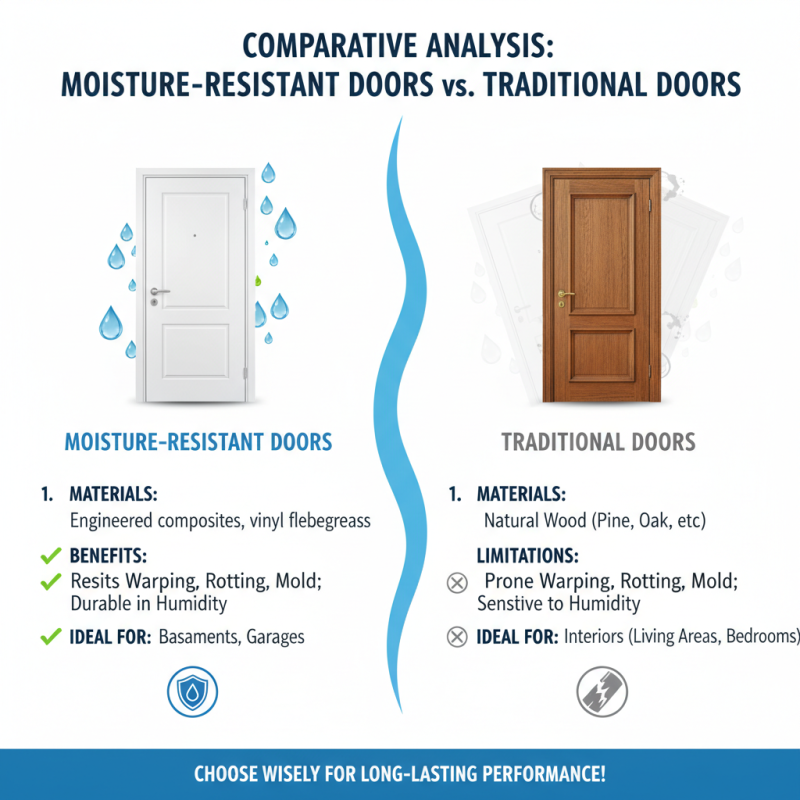
When comparing moisture resistant doors to traditional doors, the structural differences are significant. Moisture resistant doors are designed with materials that handle humidity and water exposure better. This can prevent warping, rotting, and the growth of mold, common issues with traditional wood doors. A door that stands up to moisture is essential in areas like basements and bathrooms.
Tips for choosing the right door include considering the climate in your area. In humid environments, a moisture-resistant option is crucial. Look for doors made from fiberglass or vinyl. These materials resist moisture absorption. Additionally, check for sealed edges and finishes that repel water. Such details enhance durability.
Don't overlook installation. Proper sealing around the door frame can make a big difference. Even a moisture-resistant door can suffer if not installed correctly. If you notice signs of wear over time, it may be worth discussing repairs rather than assuming your door is fine. Moisture-related problems can sneak up on you, so keep an eye on your doors' performance.