Wood Veneer Door production is becoming more important as global buyers seek natural appearance, stable performance, and responsible sourcing. The market is not simply about attractive grain. It involves core construction, veneer matching, moisture control, finishing systems, certification, and factory consistency.
Grand View Research estimates that the global wood doors market reached approximately USD 14.4 billion in 2023. Its report also forecasts continued growth through 2030. The Food and Agriculture Organization reported global roundwood production of about 3.88 billion cubic meters in 2022. These figures suggest strong material demand, but they do not guarantee reliable door quality. That distinction matters.
Wood behaves differently across species and climates. Alex C. Wiedenhoeft, a wood scientist associated with the USDA Forest Products Laboratory, has stated, “Wood is a biological material, not a homogeneous substance.” This principle is especially relevant to every Wood Veneer Door purchase. A walnut veneer may look perfect under showroom lighting, yet reveal color variation after installation. A poorly balanced door may twist near a humid coastal site.
This guide reviews China’s top 10 Wood Veneer Door manufacturers for global buyers. It considers export experience, veneer selection, engineering controls, customization, quality documentation, and after-sales communication. Public certifications and factory claims still require verification. Some rankings may remain imperfect because supplier data changes quickly. Buyers should request current test reports, sample doors, moisture specifications, and traceable material records before signing contracts. A beautiful surface is only the beginning.
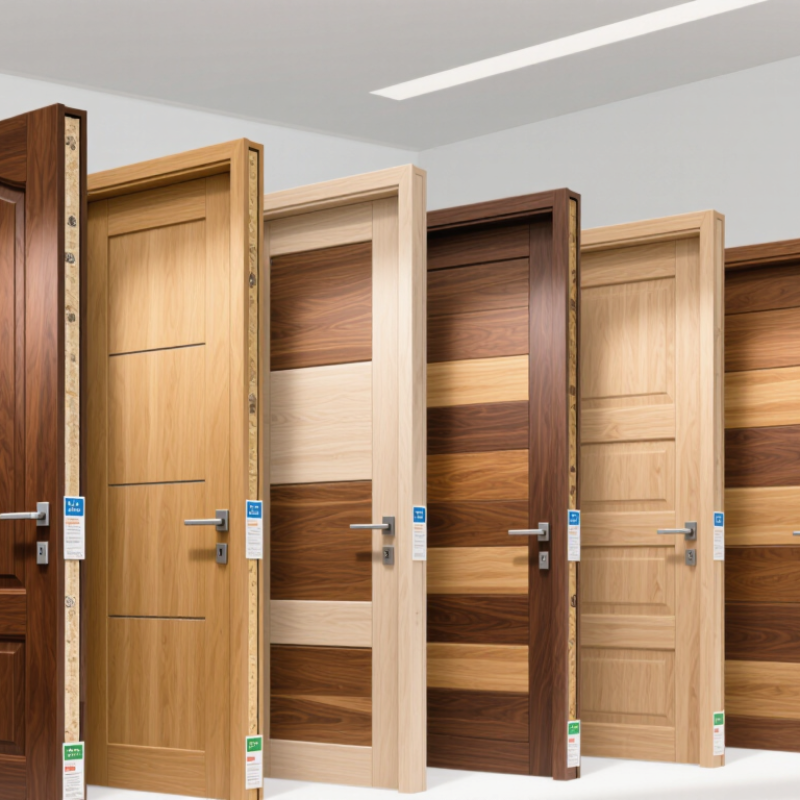
Evaluating a Chinese wood veneer door manufacturer requires more than checking catalog photos. I usually request factory videos, production records, and three recent export references. According to Grand View Research, the global wood doors market was valued at over USD 9 billion in 2023. This scale increases competition, but it also rewards consistent quality control. Ask whether veneer thickness, moisture content, and core density are measured for every batch. A beautiful sample means little if the next shipment changes.
Traceability deserves close attention. The FSC Facts & Figures report recorded more than 250 million hectares of certified forest worldwide in 2023. A manufacturer should provide valid chain-of-custody documents when certified timber is promised. Verify the certificate number independently. Also review formaldehyde test reports against the destination market’s requirements, including relevant limits under GB 18580 for wood-based materials. Do not rely on screenshots.
Visit the factory if possible. Check veneer matching under natural light, edge sealing, press temperature records, and carton drop-test results. I have seen doors pass visual inspection but warp after humid transport. That failure is easy to miss. Request samples after climate conditioning, not only fresh samples. Compare warranty terms, replacement procedures, and inspection access. Low pricing can reflect efficient sourcing, or hidden shortcuts. Sometimes, even experienced buyers ask for too little evidence.
China’s wood veneer door production is concentrated in several practical manufacturing regions. Jiangsu and Zhejiang are known for mature woodworking supply chains, skilled cabinet makers, and stable access to veneer materials. Guangdong offers strong export experience, modern CNC equipment, and efficient hardware integration. Sichuan and nearby inland areas can provide competitive labor costs and growing factory capacity, although logistics may require closer planning.
Factory capability matters more than location alone. Reliable manufacturers usually operate veneer drying rooms, calibrated pressing lines, CNC cutting equipment, and controlled finishing booths. Buyers should inspect veneer matching under natural light, not only showroom lighting. Moisture testing is essential, especially for doors shipped between humid and dry climates. A capable factory can provide production samples, batch records, packaging tests, and clear tolerance standards. Still, some factories present impressive equipment but lack consistent process control. That deserves careful questioning.
Tips: Request a small trial order before signing a large contract. Check door flatness, edge bonding, surface color, and hardware alignment. Ask how rejected panels are recorded. Visit the plant if possible, or arrange a live video inspection. Do not rely on photographs alone. A factory may look excellent online yet struggle with repeat orders. Reliable communication and honest reporting often reveal more than polished marketing materials.
The chart compares major Chinese manufacturing clusters using a normalized capability index from 0 to 10. The index reflects commonly documented regional strengths in veneer processing, CNC and finishing, engineered-wood door production, customization, and export-oriented manufacturing. It is a regional capability reference rather than a company ranking or market-share report.
Top 10 Wood Veneer Door Manufacturers for Global Buyers
Choosing among the top 10 wood veneer door manufacturers requires more than comparing catalog prices. Global buyers should examine veneer thickness, core stability, moisture resistance, and finishing consistency. A door may look impressive under showroom lighting. It may perform poorly after installation. Ask for cross-section samples, edge details, and recent batch photos. Small details matter.
The FAO reported global roundwood production at approximately 3.9 billion cubic metres in 2022. This figure highlights the scale of the wood supply chain, but not every source offers equal traceability. Buyers should request legal sourcing documents, chain-of-custody evidence, and independent quality records. ISO 9001-based production controls can support repeatable dimensions and finishing. ISO 14001 systems may also indicate stronger environmental management. Look for it in documentation.
For international projects, the strongest manufacturers usually provide moisture-tested cores, calibrated panels, export packaging, and clear tolerance data. Packaging should protect corners during sea transport, especially in humid containers. Ask whether factory testing covers adhesion, surface durability, and warping. A written inspection plan is more useful than general promises. I would also compare warranty terms, replacement procedures, and communication speed. These points often reveal operational maturity. A low quotation can conceal higher installation costs. That deserves careful reflection.
| Rank | Anonymous Manufacturer Profile | Primary Product Focus | Typical Veneer Options | Core Door Construction | Customization Capability | Typical MOQ | Typical Lead Time | Export Documentation | Best Fit for Global Buyers | Buyer Evaluation |
|---|---|---|---|---|---|---|---|---|---|---|
| 1 | Profile A | Architectural interior wood veneer doors | Oak, walnut, ash, teak, smoked veneer | Engineered timber frame with solid or honeycomb core | Custom sizes, veneer matching, grooves, inlays, stains and hardware preparation | 10–30 doors for project orders | 30–45 business days after approval | Commercial invoice, packing list, bill of lading and fumigation documents when required | Hotels, offices, apartments and high-end residential projects | Excellent project flexibility |
| 2 | Profile B | Fire-rated and acoustic veneer doors | Natural oak, ash, walnut and reconstituted veneer | Mineral-core or composite-core fire door construction | Fire ratings, acoustic upgrades, concealed closers, vision panels and oversized formats | 20–50 doors | 35–60 business days | Test reports, product specifications, packing list and export shipping documents | Commercial buildings and hospitality developments | Strong compliance orientation |
| 3 | Profile C | Solid-core flush veneer doors | White oak, red oak, beech, maple and walnut | Solid particleboard or composite core with hardwood edging | Door thickness, edge profiles, pre-hanging, laminate backing and stain matching | 30–100 doors | 25–45 business days | Invoice, packing list, certificate of origin and container documentation | Residential developments and standardized projects | Good balance of cost and quality |
| 4 | Profile D | Premium natural-veneer doors and wall panels | Book-matched oak, walnut, teak, ebony accents and ash | Stable engineered substrate with selected hardwood lippings | Book matching, slip matching, fluted details, wall panel integration and custom stains | 5–20 doors | 40–70 business days | Material declarations, packing list, invoice and installation references where applicable | Luxury villas, restaurants and premium hotels | High-end visual consistency |
| 5 | Profile E | Commercial flush doors with repeatable finishes | Oak, ash, beech and engineered wood veneer | Engineered wood core with veneer face and hardwood edge banding | Repeat sizes, CNC routing, louver options, glazing cut-outs and factory pre-finishing | 50–150 doors | 25–40 business days | Standard export documents and product quality inspection records | Large-volume construction and fit-out contracts | Efficient for volume orders |
| 6 | Profile F | Moisture-resistant veneer doors | Teak, oak, ash, walnut and treated reconstituted veneer | Moisture-resistant engineered core with sealed edges | Humidity-resistant coatings, bathroom-area specifications, matching frames and special seals | 20–60 doors | 35–55 business days | Invoice, packing list, material specifications and shipping documents | Coastal properties, serviced apartments and humid climates | Suitable for demanding environments |
| 7 | Profile G | Contemporary veneer doors with decorative machining | Oak, ash, walnut and smoked reconstituted veneer | Engineered core with CNC-machined veneer face | Vertical grooves, geometric patterns, shadow gaps, concealed frames and flush skirting details | 10–40 doors | 30–50 business days | Commercial invoice, packing list, drawings and product care instructions | Modern offices, retail interiors and design-led residences | Strong contemporary design capability |
| 8 | Profile H | Value-oriented veneer doors for international distribution | Oak, beech, ash, pine veneer and engineered veneer | Hollow-core or semi-solid-core construction depending on specification | Standard sizes, basic stains, selected hardware drilling and private-label packaging | 50–200 doors | 20–40 business days | Invoice, packing list, carton markings and bill of lading | Distributors, builders’ merchants and budget housing | Competitive entry-level pricing |
| 9 | Profile I | Custom hotel-room and apartment door sets | Oak, walnut, ash, teak and dyed veneer | Solid-core door leaf with matching frame, architrave and hardware preparation | Door sets, ironmongery coordination, numbering, access-control preparation and installation drawings | 30–100 complete door sets | 40–65 business days | Shop drawings, packing lists, invoices and project-specific inspection documents | Hotels, student housing and multi-unit residential projects | Well suited to coordinated door packages |
| 10 | Profile J | Eco-focused wood veneer doors | FSC-controlled-source options, oak, ash, beech and reconstituted veneer | Low-emission engineered core with water-based or low-VOC finish options | Environmental declarations, low-VOC coatings, recycled packaging and customized finish schedules | 20–80 doors | 30–55 business days | Material declarations, packing list, invoice and sustainability documentation when available | Green buildings and environmentally focused developments | Good sustainability positioning |
Buyer note: Lead times, minimum order quantities, fire ratings, acoustic performance, timber legality documents and sustainability certifications should be verified against the final quotation, approved drawings and destination-country regulations.
China Top 10 Wood Veneer Door Manufacturers for Global Buyers
Product Quality, Materials, Certifications, and Customization Options
When evaluating China’s top ten wood veneer door manufacturers, global buyers should inspect more than polished samples. Experienced purchasing teams check veneer matching, core density, moisture content, edge sealing, and hardware fitting. A stable indoor moisture range helps reduce warping during overseas transport. Small details matter.
Natural oak, walnut, ash, and teak veneers offer different grain patterns, costs, and durability. Reconstituted veneer provides more consistent color and can reduce material variation. However, a showroom panel may hide weak joints or uneven sanding. I have learned that factory visits and random carton inspections reveal more than photographs. Not every attractive door performs well.
Reliable manufacturers should provide traceable material records and relevant test reports. Depending on the destination market, buyers may request FSC chain-of-custody evidence, ISO 9001 certification, and formaldehyde compliance under standards such as CARB Phase 2 or TSCA Title VI. Fire, acoustic, and durability testing may also be necessary. Certifications must match the actual product, not merely the factory.
Customization can include veneer direction, book matching, stain color, door thickness, concealed frames, acoustic cores, and pre-installed locks. Clear technical drawings prevent costly misunderstandings. Ask for a control sample. Confirm tolerances in writing. Lead times can change when finishes, oversized panels, or special packaging are added. A dependable supplier explains these limits openly, even when the answer is inconvenient.
China’s top 10 wood veneer door manufacturers can differ greatly in export capability. Global buyers should assess more than factory photos and attractive quotations. Ask for veneer species, core construction, moisture content, surface finish, and door-test results. A reliable supplier explains tolerances clearly and provides consistent samples. Export experience also matters. Confirm packing methods, container loading plans, customs documents, and destination-country requirements for wood products.
Pricing depends on veneer grade, grain matching, door thickness, hardware, paint system, order volume, and Incoterms. Freight and protective packaging can change the final cost sharply. Request a detailed quotation with separate tooling, sample, inspection, and shipping charges. Be careful with unusually low prices. They may hide weaker cores or incomplete services. That is not always true, but it deserves questions.
Tips: Compare three written quotations using the same specifications. Inspect a full-size sample, not only a small veneer panel. Check veneer joints under side lighting, measure moisture with a meter, and review carton corner protection. Ask whether the supplier supports installation guidance and replacement parts. Verify production capacity through a live video audit or an independent inspection. A factory may communicate well before payment, then respond slowly later. Include response times, acceptable defects, inspection rights, and delivery penalties in the purchase contract.