10 Best Moisture Resistant Doors for Global Buyers?
Moisture can quietly shorten a door’s service life. A swollen edge, peeling finish, or stubborn latch may signal repeated exposure to humidity or splashing water. For global buyers, choosing Moisture Resistant Doors is not simply a matter of selecting a waterproof-looking surface. Core material, edge sealing, frame details, hardware, and installation all affect performance.
Building scientist Joseph Lstiburek has emphasized controlling moisture as a core part of durable building design. In paraphrase: “Keep water out of vulnerable materials, and the assembly is more likely to last.” This is a guiding principle, not a guarantee that any door will resist every wet condition. Even a well-made product can fail when water sits at an unsealed bottom edge.
This guide compares ten door options through practical buying considerations: likely exposure, construction, finish, maintenance, and suitability for interior or exterior use. A bathroom door faces steam; a laundry-room door may meet splashes; an exterior entrance may face wind-driven rain. The details matter. Buyers should check manufacturer specifications and confirm that the door is intended for the installation environment. Moisture resistance varies by product, and labels alone can be vague. A careful comparison helps, but there is no perfect door for every climate.
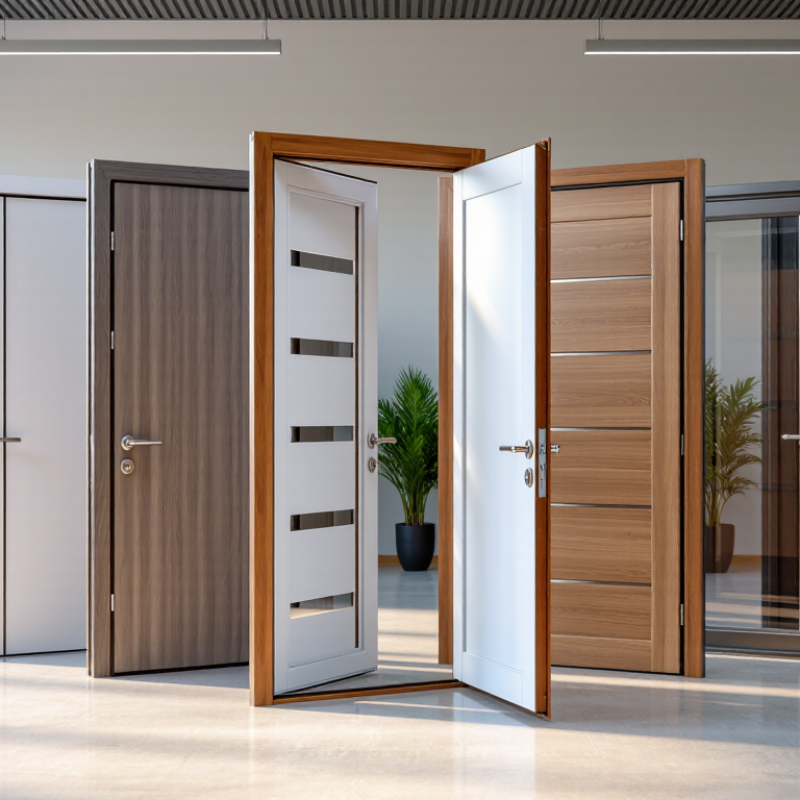
What Makes a Door Moisture-Resistant?
Moisture resistance begins with the door’s core, not its surface color. A dense composite, fiberglass, or well-sealed hardwood core limits water absorption and dimensional movement. The U.S. Department of Agriculture’s Wood Handbook explains that wood changes size as its moisture content changes. That movement can create gaps, sticking, and cracked finishes. The risk increases in bathrooms, coastal homes, and unconditioned storage areas.
The skin and edges matter just as much. A sealed laminate, molded surface, or waterproof coating should continue across the top, bottom, and hinge cutouts. Unprotected edges often absorb water first. Look for test evidence based on ASTM D570 water-absorption methods or relevant WDMA performance standards. However, one laboratory result is not enough. Ask whether testing included repeated wetting, drying, and temperature changes. Real buildings are less polite than laboratories.
Installation controls the final performance. EPA moisture-control guidance recommends managing bulk water, vapor, and air movement together. Indoor relative humidity should generally remain between 30% and 50%, according to EPA indoor-air guidance. Use a sloped threshold, durable seals, corrosion-resistant hardware, and a small clearance above the floor. A door can be highly resistant and still fail after one unsealed cut. That detail is easy to miss. Global buyers should request test conditions, edge-sealing specifications, maintenance instructions, and warranty exclusions before comparing prices.
Materials and Construction Methods That Limit Water Damage
10 Best Moisture Resistant Doors for Global Buyers?
Materials and Construction Methods That Limit Water Damage
Moisture-resistant doors begin with the core, not the paint. Fiberglass skins, aluminum panels, and composite boards absorb far less water than untreated timber. A closed-cell foam core also limits swelling after repeated humidity changes. In coastal projects, I have found that material choice matters most around the lower 300 millimeters of the door.
The edges deserve equal attention. Sealed edge bands, welded corners, and weather-resistant adhesives reduce hidden water entry. A raised threshold should shed rain away from the room. Add a drip edge above exterior doors. Small details often prevent expensive repairs. Still, no door is waterproof forever.
Installation quality can defeat excellent materials. The frame must remain square, with tight joints and controlled drainage paths. Stainless or corrosion-resistant hinges help when salt air reaches the hardware. For timber doors, kiln-dried wood, protective coatings, and ventilated finishing gaps can slow moisture movement. However, coatings need regular inspection, especially near hinges and door bottoms.
I have seen attractive doors fail because installers sealed the drainage holes. That mistake traps water inside the frame. Buyers should request moisture testing, edge inspection, and clear maintenance instructions. Climate, exposure, and cleaning habits also influence performance. A specification that works in a dry inland region may perform poorly beside heavy tropical rainfall.
Ten Moisture-Resistant Door Types for Global Buyers
Moisture-resistant doors suit bathrooms, laundry rooms, coastal homes, and other damp spaces, but their performance depends on construction and installation. Ten useful types include fiberglass-skin doors, FRP panel doors, solid PVC doors, uPVC doors, wood-plastic composite doors, aluminum-framed doors, stainless-steel doors, compact-laminate doors, sealed marine-plywood doors, and treated hardwood doors. Some categories overlap in the market. Details matter.
Fiberglass and FRP resist swelling and are easy to wipe clean; PVC and uPVC work well where frequent splashes are expected. WPC and compact laminate offer dense, low-maintenance surfaces, while aluminum and stainless steel suit utility areas but may feel cold indoors.
Sealed marine plywood and treated hardwood bring a warmer appearance, yet their edges and finishes need regular inspection. None is magic. Check the core, frame, hinges, and bottom edge, not just the face.
A poorly sealed cutout can let water in even when the panel itself resists it. For a steamy bathroom, allow ventilation and follow the maker’s fitting guidance. I would not trust a “waterproof” label alone; exposure, upkeep, and installation still matter.
How Door Performance Varies Across Climates and Applications
10 Best Moisture Resistant Doors for Global Buyers?
How Door Performance Varies Across Climates and Applications
Moisture resistance is not one universal feature. A door suitable for a dry coastal warehouse may fail in a tropical bathroom. Humid air can swell untreated edges, while salty wind can weaken exposed hardware. In cold regions, repeated freezing and thawing create stress around joints and seals. Small gaps matter.
Material selection should follow the application. Fiberglass and well-sealed composite doors often handle wet entrances effectively. Marine-grade plywood can perform well, but only with protected edges and careful finishing. Solid timber may suit controlled interiors, yet it needs stable humidity and regular inspection. Steel doors resist impact, although condensation can cause hidden corrosion.
Installation often decides the final result. Leave suitable clearance for seasonal movement. Seal cut edges after trimming. Use drainage details where rain reaches the threshold. A bathroom door needs different protection from a factory service door. That sounds obvious, but projects still use one specification everywhere. It is a costly shortcut.
For global buyers, request performance data from independent testing, including water absorption, humidity cycling, and seal durability. Check the complete door assembly, not just the slab. I would also inspect samples after shipping and storage. Packaging may protect the surface, but not always the edges. No door is maintenance-free. That expectation deserves reconsideration.
10 Moisture-Resistant Door Types for Global Buyers
Indicative moisture-resistance ratings for common door materials (5 = highest). Actual performance depends on construction, edge sealing, hardware, installation, and exposure conditions.
Fiberglass, uPVC, and solid phenolic doors are often suitable for humid or wet areas. For exterior use, specify weather-rated construction and protect joints and edges; no door material is maintenance-free.
Key Factors for Comparing and Specifying Moisture-Resistant Doors
10 Best Moisture Resistant Doors for Global Buyers?
Key Factors for Comparing and Specifying Moisture-Resistant Doors
Moisture resistance begins with the exposure profile, not the door label. A bathroom door faces vapor. An exterior entrance faces wind-driven rain, splashback, and repeated drying. Coastal projects add salt and ultraviolet stress. Specify the climate zone, installation location, and expected cleaning routine before comparing materials.
EPA moisture-control guidance recommends indoor relative humidity between 30% and 50%. It also identifies 60% as a practical upper limit for reducing condensation and mold risk. FEMA guidance warns that mold may develop within 24 to 48 hours after water exposure. These figures make edge sealing important. Inspect the bottom rail, hinge side, lock bore, and frame joint. A beautiful face may hide a vulnerable core.
Compare test evidence, not marketing language. ASTM E331 evaluates water penetration under controlled pressure, while ASTM E283 measures air leakage. For repeated wetting, examine swelling data, coating adhesion, fastener corrosion, and hardware compatibility. WDMA performance classifications can help align doors with use conditions, but local codes still control final selection. Ask for test reports showing specimen size, pressure, duration, and failure criteria. Results can change after field cutting. That part is often underestimated. A door with a durable skin may still fail when an unsealed edge meets standing water. Consider drainage, threshold height, replacement access, and installer experience. The specification may need revision after a site mock-up.