Fire Resistant Glass Industry in the United States: Current Landscape and Trends
Fire resistant glass plays a critical role in the United States building safety landscape, particularly driven by stringent fire safety codes such as the International Building Code (IBC) and NFPA standards. Increasing urban density, high-rise construction, and commercial complex development create rising demand for fire-resistant glazing that combines both safety and aesthetics.
Today, fire resistant glass manufacturers and suppliers in the US provide a wide array of solutions engineered for fire containment, smoke control, and heat insulation. Products like laminated fire-rated glass, wired glass, and advanced intumescent glass are popular across hospital facilities, airports, educational campuses, data centers, and government buildings.
In particular, nano-silica insulated fire-resistant glass is gaining traction in the US for its superior thermal insulation and clearer transparency compared to traditional wired glass. These innovations enable architects to meet both fire safety and modern design demands, encouraging wider adoption in corporate office towers and luxury residential developments.
Development Trends and Technological Innovations
The US fire-resistant glass sector is evolving with a focus on multi-functional glazing that integrates fire resistance with energy efficiency, UV protection, and soundproofing. Smart glass and AI-assisted quality control systems are also emerging, reflecting the overall digital transformation of construction materials manufacturing.
Manufacturers are emphasizing modularity and customization with OEM and ODM services to meet local jurisdiction requirements and end-user preferences. Environmental sustainability is another major consideration, inspiring research into recyclable glass components and non-toxic insulating materials.
Local Applications Across US Markets
Key sectors demanding fire resistant glass in the US include:
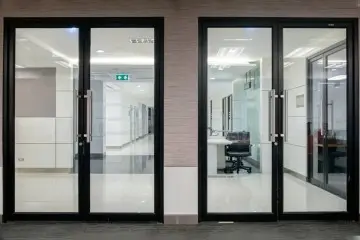
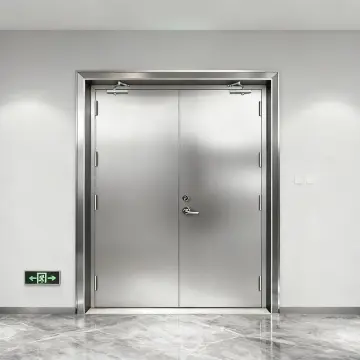
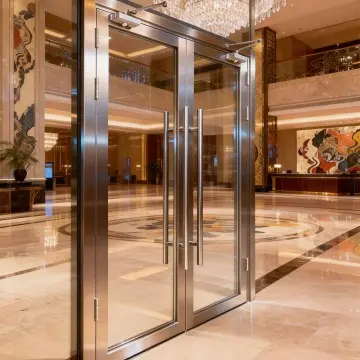
- Commercial real estate: Fire-rated partitions and doors for office buildings in cities like New York, Chicago, and Los Angeles
- Healthcare facilities: Specialized fire-rated glazing in hospitals and research labs
- Transportation hubs: Fire safety installations at airports and metro stations
- Educational institutions: Fire-resistant windows and doors in schools and university campuses
- Industrial complexes: Blast resistant and intrusion-resistant door solutions at manufacturing plants and chemical facilities
Fire resistant glass not only protects property and lives but also plays an important role in uninterrupted operations after fire incidents, making it a crucial investment across these applications.