Leave Your Message
What Is a Blast Proof Steel Door?
A Blast Proof Steel Door is an engineered barrier designed to reduce damage from sudden pressure, flying fragments, and forced air movement. Its strength comes from a complete system, not steel alone. The leaf, frame, hinges, locks, anchors, wall, and surrounding structure must work together.
Blast protection engineer Dr. Andrew J. Tyas has emphasized a crucial principle: “Blast performance depends on the whole structural system, not one isolated component.” That practical view matters during specification. A thick door can still fail if its frame pulls away from weak concrete. Poor installation may create a dangerous gap near the threshold. Small details matter.
These doors often include reinforced steel skins, internal stiffeners, heavy-duty hinges, and tested locking hardware. Their performance is measured through controlled testing and engineering analysis. Ratings should match the expected pressure, impulse, fragment risk, and building use. A security door is not automatically blast resistant.
The details are physical.
Imagine a reinforced door closing inside a concrete frame. Dust settles around the anchors. The hinges hold alignment. The seals limit pressure movement. Yet no product should be treated as universally protective. Site conditions, aging, corrosion, and maintenance can change performance.
This article explains how Blast Proof Steel Door systems are built, tested, selected, and installed. It also examines common assumptions that sound reasonable but deserve careful review. Real protection requires evidence, qualified engineering, and honest limits.
What Is a Blast Proof Steel Door?
Definition and Core Purpose of a Blast Proof Steel Door
A blast proof steel door is a reinforced door assembly designed to resist sudden explosive pressure. Its purpose is not to stop every blast. Instead, it helps reduce pressure, debris, and structural damage entering a protected space.
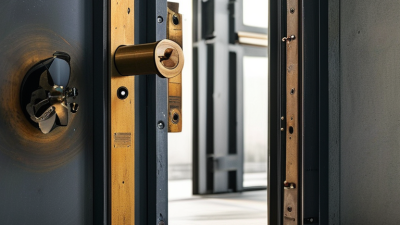
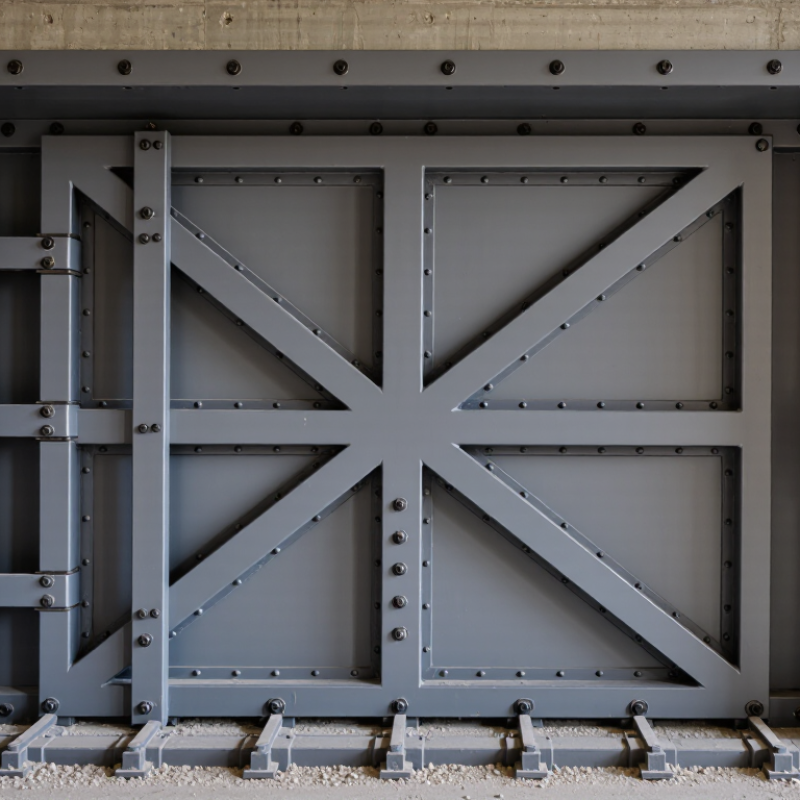
The assembly usually includes a heavy steel leaf, strengthened hinges, a rigid frame, and secure locking points. Seals may also limit smoke, dust, and pressure leakage. Every component matters. A strong door with a weak frame can still fail.
Performance depends on tested pressure ratings, impact conditions, installation quality, and surrounding construction. These factors must match the building’s risk assessment. A door rated for one pressure level may not suit another location.
In practical inspections, small details often reveal serious weaknesses. Gaps around the frame, loose anchors, or incorrect hardware can reduce protection. Maintenance teams should check hinges, locks, seals, and fasteners at planned intervals.
It is also important to avoid the phrase “blast proof” as an absolute promise. No door can guarantee complete protection in every event. The term describes controlled resistance under defined testing conditions.
A qualified engineer should review the wall, frame, foundation, and door together. This approach is more reliable than selecting a heavy door by appearance alone. Sometimes, the overlooked frame causes the real problem.
| Data Dimension | Fact-Based Description |
|---|---|
| Definition | A blast proof steel door is a specially engineered door assembly designed to resist the effects of a nearby explosion and help limit damage to protected rooms, equipment, and occupants. |
| Core Purpose | Its main purpose is to reduce the transmission of blast pressure, reflected pressure, flying fragments, and structural deformation through an opening in a building. |
| Primary Material | Steel is commonly used because it provides high strength, stiffness, impact resistance, and durability. The steel grade, thickness, reinforcement, and fabrication method must be selected for the required design conditions. |
| Complete Door Assembly | Blast performance depends on the complete assembly, including the door leaf, frame, hinges, locking system, anchors, seals, surrounding wall, and installation details—not only the steel panel. |
| Blast Load | Blast loads are commonly described using incident pressure, reflected pressure, impulse, duration, and standoff distance. These parameters vary according to the explosive event, location, and building geometry. |
| Pressure Units | Blast pressure may be reported in pounds per square inch (psi) or kilopascals (kPa). The conversion is 1 psi = 6.895 kPa. A stated pressure rating should always be reviewed together with the corresponding impulse and test conditions. |
| Structural Behavior | A properly designed door may be engineered to absorb energy through controlled elastic or inelastic deformation while remaining attached to the frame and preventing hazardous failure or uncontrolled ejection. |
| Frame Requirements | The frame must transfer blast forces into the surrounding structure. Strong anchors, adequate jamb reinforcement, and a suitably designed wall connection are essential to the overall performance of the door. |
| Locking Hardware | Locks, bolts, latches, and operating hardware must remain engaged under the specified load. Ordinary architectural hardware may not be suitable for blast-resistant applications. |
| Sealing Function | Specialized seals can help control air leakage, smoke, dust, and pressure transfer. Seals should be selected for compatibility with the required blast, fire, acoustic, and environmental conditions. |
| Testing and Verification | Performance is normally verified through engineering calculations, physical blast testing, or both. The test or assessment should identify the pressure, impulse, duration, deformation criteria, and acceptance requirements. |
| Relevant Standards | Depending on the project location and application, evaluation may refer to recognized blast-testing or protective-design procedures, such as ASTM F2912, UFC protective design criteria, or other applicable national standards. The correct standard must be confirmed by the project engineer or authority having jurisdiction. |
| Blast Resistance Versus Bullet Resistance | Blast resistance and ballistic resistance are different performance categories. A blast door may require pressure and impulse resistance, while a bullet-resistant door is evaluated against specified ammunition and projectile conditions. |
| Blast Resistance Versus Fire Resistance | Blast resistance does not automatically mean fire-rated performance. If both functions are required, the door assembly must be separately designed and evaluated for the applicable fire-resistance criteria. |
| Typical Applications | Common applications include industrial facilities, energy infrastructure, chemical and process plants, defense-related buildings, critical utility rooms, transport facilities, and other sites where explosion hazards are assessed. |
| Single and Double Configurations | Blast proof steel doors may be manufactured as single-leaf or double-leaf assemblies. Double-leaf systems require carefully designed meeting stiles, locking points, hinges, and frame connections. |
| Door Operation | Depending on size and weight, the door may be manually operated or fitted with assisted opening, powered operators, hold-open devices, or remote-control systems. These features must not compromise the required protective performance. |
| Installation Importance | Incorrect installation, weak surrounding construction, unsuitable anchors, or field modifications can significantly reduce performance, even when the original door assembly was properly designed or tested. |
| Design Limitation | No blast door can be considered universally protective. Its performance is limited to the specific load case, opening size, support conditions, configuration, and acceptance criteria for which it was designed and evaluated. |
| Specification Checklist | A project specification should identify the required blast load, pressure, impulse, standoff distance, door size, operation, frame connection, wall type, hardware, corrosion environment, fire or smoke requirements, testing method, and installation criteria. |