Choosing the right Fire Rated Hollow Metal Door supplier requires more than comparing prices or browsing product photographs. Performance depends on testing, labeling, hardware compatibility, installation support, and documented quality control. NFPA’s Fire Loss in the United States During 2022 reported approximately 1.5 million fires, 3,790 civilian fire deaths, and nearly $18.1 billion in direct property damage. These figures give the product category real urgency.
Standards matter.
NFPA 80 and NFPA 252 establish important expectations for fire door assemblies, while UL 10C evaluates positive-pressure fire tests. A credible supplier should explain rating periods, frame construction, core materials, glazing limits, and inspection procedures clearly. Lori Greene, an architectural openings consultant, has often stressed this principle: “A fire door is a life-safety product.” That statement deserves practical attention. A properly labeled door may still fail when installers use incorrect hinges, damaged seals, or unsuitable vision panels.
This guide examines China’s leading suppliers through an E-E-A-T-focused lens, combining manufacturing experience, technical documentation, certification evidence, and customer support. Factory scale can be impressive. It is not proof of dependable performance. Some supplier claims also require closer verification, especially when certificates lack traceable test numbers or current scope details. Buyers should request test reports, product drawings, quality records, and project references before making a decision. The process is less glamorous than a glossy catalog, but safer buildings often begin with careful paperwork.
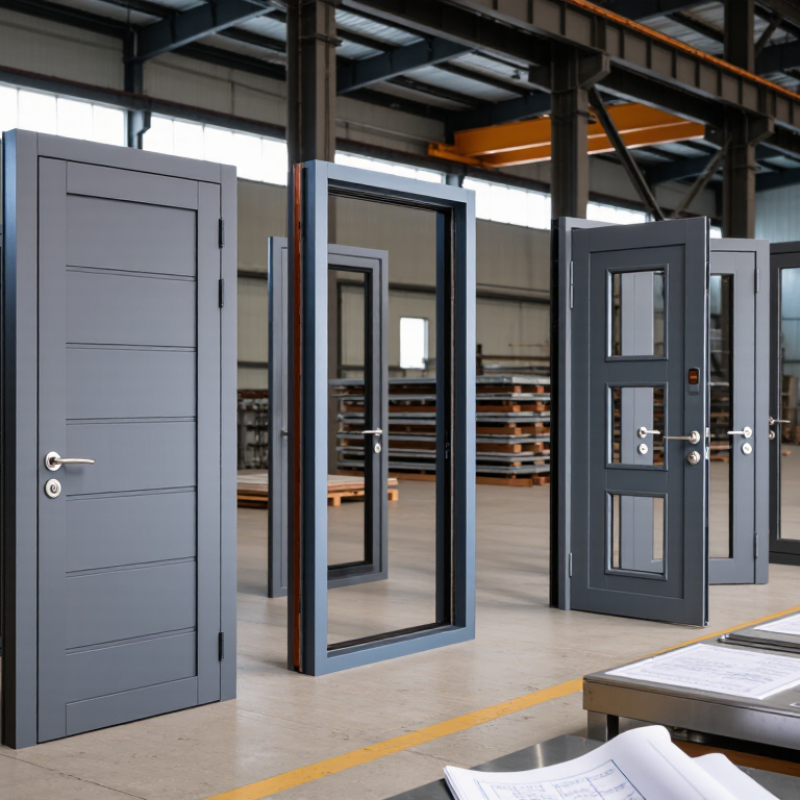
Fire-rated hollow metal doors are commonly specified for protection periods from 20 to 180 minutes. The correct rating depends on the tested door assembly, wall construction, frame, hardware, and glazing. Under UL 10C, testing emphasizes positive-pressure fire exposure. NFPA 252 evaluates the complete fire door assembly, including flame, heat, and hose-stream performance. EN 1634-1 uses European test methods and may assess integrity and insulation separately.
In practical procurement, a 90-minute door is not automatically suitable for every 90-minute wall. Site conditions matter. A heavy frame, closer, latch, or vision panel can affect performance. Test reports, certification labels, installation instructions, and hardware schedules should match the intended application. I have seen projects delayed because the door rating was checked, but the frame or glazing was overlooked. That mistake is easy to repeat.
Tips: Request complete test evidence, not only a rating number. Confirm whether the rating covers the entire assembly. Check the wall type, clear opening, hardware, seals, and local approval requirements. Ratings above 120 minutes need especially careful verification, because availability and test scope can vary. Small details matter. Even accurate documents may not reflect poor installation, so inspect frame anchoring, gaps, and intumescent seals before handover.
China’s leading fire-rated hollow metal door suppliers typically specify 16–18 gauge steel, but thickness alone does not determine fire performance. A 16-gauge face offers greater resistance to impact and warping than an 18-gauge face. However, the complete door assembly must be tested with its frame, hinges, closer, latch, glazing, and seals.
NFPA’s Fire Loss in the United States 2023 report recorded approximately 1.5 million fires and over $22 billion in property damage. These figures show why material selection deserves careful review. Core insulation matters. Mineral wool or other tested fire-resistant cores can limit heat transfer and support longer ratings. Honeycomb cores may reduce weight, but their fire performance depends on the certified assembly. Steel-stiffened cores provide durability, although they can create thermal bridges. That detail is often overlooked.
A practical specification should identify the required rating, exposure condition, and test standard. NFPA 80 covers installation and maintenance, while positive-pressure testing under UL 10C evaluates fire door assemblies. The label should apply to the entire configuration, not only the steel sheet. In field experience, an apparently strong 16-gauge door can underperform when seals are damaged or hardware is mismatched. That assumption fails. Suppliers should provide test evidence, gauge confirmation, core details, and installation guidance. Small documentation gaps can become serious procurement risks.
China Top Fire Rated Hollow Metal Door Suppliers?
A credible supplier should prove more than a fire-rating label. ISO 9001 certification indicates controlled processes, documented inspections, and corrective actions. It does not automatically prove door performance. Ask for certificate scope, audit dates, and production records. Small gaps matter.
UL 10C testing evaluates positive-pressure fire performance in a controlled furnace. Request the complete test report, including door size, core construction, glazing, frame, and rating duration. NFPA’s Fire Loss in the United States During 2023 estimated 1,504,500 reported fires. That figure reinforces why traceable fire testing deserves careful review. A copied certificate is not enough.
CE marking should be checked against the applicable European construction requirements. It is not, by itself, proof of every fire-door attribute. Hardware also needs practical evidence. A 10,000-cycle test should identify load, hinges, closer, latch, test speed, and failure criteria. Ask for dated laboratory records, not only a supplier statement. In real projects, installation can weaken excellent factory performance. Verify tolerances, seals, anchors, and maintenance instructions. I have seen evaluations focus heavily on steel thickness while overlooking closing force. That is an avoidable mistake. Suppliers should welcome independent sampling and repeat testing. No document replaces a well-installed, properly maintained door.
| Evaluation Dimension | Recommended Requirement | Acceptable Evidence | Verification Method | Weight | Benchmark Score |
|---|---|---|---|---|---|
| Fire-Rated Hollow Metal Door Assembly | The complete door assembly should match the required fire-resistance period, including door leaf, frame, glazing, seals, hinges, lockset, closer, and installation details. | 第三-party test report, approved assembly drawings, product specifications, and installation instructions. | Check that the tested configuration matches the proposed dimensions, materials, hardware, glazing, and wall type. | 25% | 0–25 |
| UL 10C Positive-Pressure Testing | Where UL 10C is specified, the complete swinging-door assembly should have been tested under the applicable positive-pressure fire-test procedure. | Traceable test report or listing documentation identifying the assembly, fire rating, size limits, and permitted hardware. | Confirm report validity, test configuration, rating period, maximum dimensions, and component limitations. UL 10C is a test standard, not a blanket approval for every door produced. | 20% | 0–20 |
| ISO 9001 Quality Management System | A current ISO 9001:2015 certificate should cover the manufacturing site and the relevant scope of door, frame, or metal building-product production. | Certificate showing certificate number, scope, issuing body, site address, issue date, expiry date, and surveillance status. | Verify the certificate with the issuing certification body and ensure the certificate scope covers the actual production facility. | 15% | 0–15 |
| CE and European Market Compliance | For products placed on applicable European markets, the supplier should identify the relevant legislation and harmonized product standards. Fire and smoke-control doors may require assessment under EN 16034 together with the applicable door-product route. | Declaration of Performance, CE marking information, factory production-control documentation, and notified-body documents where required. | Confirm that CE documentation applies to the exact product, intended use, performance characteristics, and destination market. CE marking alone is not a universal fire-rating certificate. | 10% | 0–10 |
| 10,000-Cycle Hardware Testing | Hinges, closers, panic devices, locks, and other specified hardware should demonstrate at least 10,000 operating cycles when this is a project requirement. | Laboratory test report or manufacturer test record showing hardware type, load, cycle count, failure criteria, and test result. | Check that the tested hardware is identical or technically equivalent to the supplied hardware and that the door size and weight fall within the tested range. A 10,000-cycle target is a procurement benchmark, not a universal certification by itself. | 10% | 0–10 |
| Material and Corrosion Protection | Steel grade, sheet thickness, core type, weld quality, surface preparation, primer, and finish should be defined according to the project environment. | Material certificates, thickness records, coating technical data, paint-system specifications, and sample inspection records. | Review incoming-material controls, dimensional inspection, coating thickness, weld appearance, and finish consistency. | 8% | 0–8 |
| Factory Production and Inspection Controls | The factory should maintain documented controls for cutting, forming, welding, assembly, dimensional accuracy, labeling, and final inspection. | Quality-control plan, inspection forms, calibration records, nonconformance procedure, corrective-action records, and batch traceability. | Conduct a remote or on-site audit and sample finished doors against approved drawings and purchase specifications. | 7% | 0–7 |
| Documentation and Traceability | Each order should be traceable from raw materials and hardware through production, inspection, packaging, and delivery. | Purchase-order identification, batch records, packing lists, inspection reports, labels, and controlled installation manuals. | Select random units or cartons and trace them back to production and inspection records. | 5% | 0–5 |
| Total Evaluation Weight | 100% | 100 Points | |||
China’s leading fire-rated hollow metal door suppliers are best assessed through production capacity, certification quality, and verified export performance. Large manufacturers often operate automated cutting, welding, foaming, and powder-coating lines. Their annual capacity may range from tens of thousands to several hundred thousand door sets. Capacity alone proves little. Buyers should inspect factory layouts, shift records, quality procedures, and recent production samples.
Reliable suppliers provide test reports for complete door assemblies, not only individual steel sheets. Common references include UL 10C, EN 1634-1, and BS 476, depending on the destination market. Reports should identify the door leaf, frame, hardware, glazing, and permitted installation details. ISO 9001 certification can support process control, but it does not replace fire testing. Check the certificate issuer and validity date.
Export data adds practical evidence. Customs records, shipment frequency, destination markets, and repeat orders can reveal whether a supplier regularly handles international projects. Ask for redacted bills of lading, packing photos, and inspection reports. Some suppliers present impressive export numbers without separating fire doors from general steel products. That deserves caution. Factory visits can expose uneven welds, thin coatings, or poorly fitted hinges. Small details matter. I would also compare failed test histories when available, because supplier claims are never the whole picture.
China Top Fire Rated Hollow Metal Door Suppliers?
A reliable procurement review starts with the tested assembly, not the door leaf alone. Request reports showing the complete door, frame, glazing, hardware, and closer combination. Check ratings under NFPA 252, UL 10C, or equivalent standards. NFPA’s 2024 U.S. Fire Loss report recorded approximately 1.45 million fires in 2023. That figure reinforces why traceable testing matters. A certificate without a matching model number is weak evidence.
Lead time should include drawings, testing approval, production, packing, and ocean freight. Ask suppliers to separate each stage. Confirm MOQ by size, finish, hardware set, and customization level. A low quoted MOQ may exclude special frames or panic hardware. Warranty terms need practical detail: coverage period, corrosion limits, replacement procedure, and response time. The 2023 Dodge Construction Network outlook also highlighted continued schedule pressure in construction supply chains, so written delivery milestones are essential. Forecasts can still fail. Leave contingency time.
Tips: Audit the factory before issuing a large order. Review welding records, coating thickness logs, batch labels, and final inspection photos. Select random doors and compare dimensions against approved drawings. Ask for corrective-action records, not only polished certificates. Verify that test evidence matches the intended configuration. Keep one sealed sample for future comparison. Photographs help, but they cannot replace physical checks.